Racing-Style vs Ergonomic Gaming Chairs
Neither design is a scam and neither is superior. Racing chairs are built to lock you in; ergonomic chairs are built to let you move.
By Maya Ellis · October 13, 2026 · Updated October 13, 2026
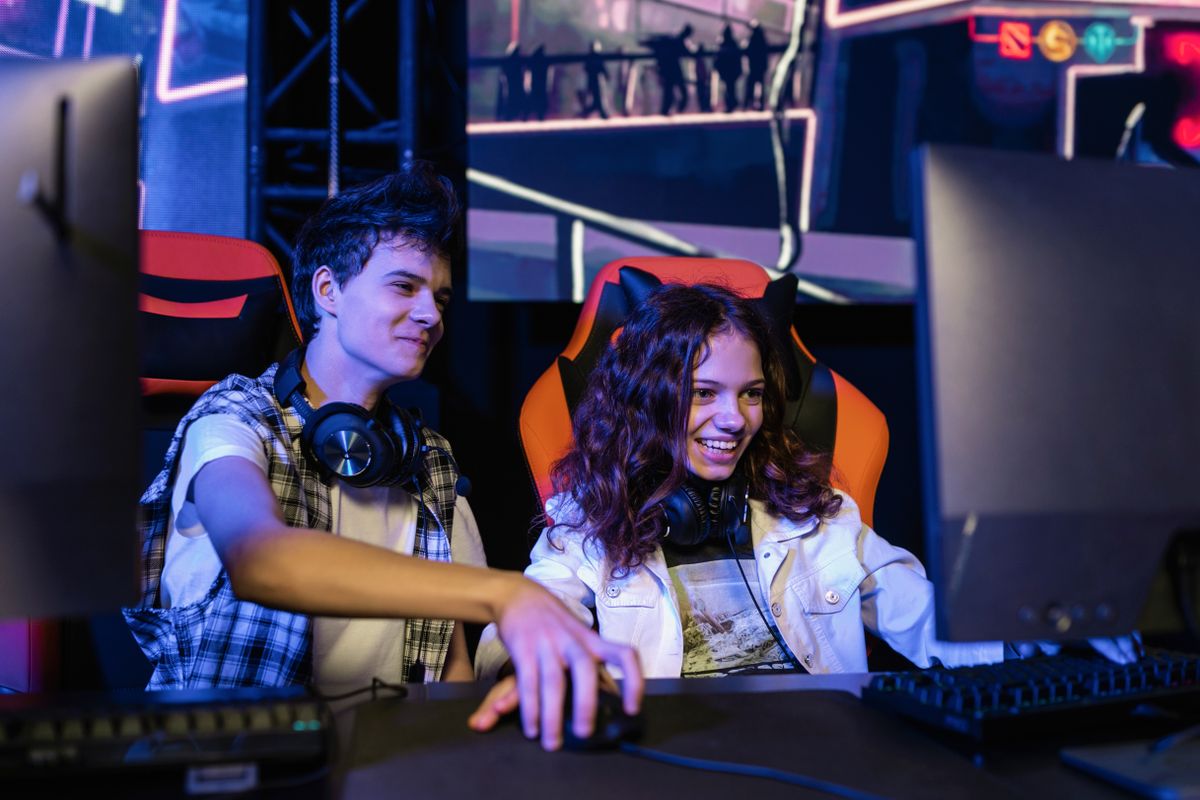
The two categories are solving opposite problems. Racing-style chairs descend from bucket seats — their job is to hold one body in one position, snugly, for hours. Ergonomic task-style chairs descend from office seating — their job is to support a body that keeps moving. Buying the wrong one is not a quality problem; it is a use-case mismatch.
What the racing shape actually does
Side bolsters are the defining feature, and they are honest about it: they constrain. That containment feels supportive in long ranked sessions and claustrophobic for anyone who sits cross-legged or shifts constantly. The rest of the recipe follows: high backrests, deep recline angles, and thick leatherette. The Corsair TC100 Relaxed reclines from 90° to 160°; the Secretlab Titan Evo, racing-derived, reaches 165°.
The costs are equally consistent. Bolsters narrow the usable seat — Corsair lists 33 cm between bolsters on the TC100 against a 54 cm overall seat width. Leatherette runs warm. And recline degrees are leisure features, not support features.
What the ergonomic shape does
Task-style gaming chairs trade the bucket for adaptability. The Herman Miller Vantum is the archetype: an elastomer suspension backrest instead of foam padding, a forward-leaning posture bias, a thoracic support pad, and a seat depth of 17.5 inches with a 350 lb rating — numbers aimed at working posture, not lounging. Its warranty is twelve years, which tells you where the engineering budget went.
What you give up is obvious on the spec sheet: shallower recline, less padding, a look that belongs in an office. If your sessions mix work and play, that is a feature. If you never touch the recline, it is dead weight.
The middle ground is real
The categories are converging. The Titan Evo keeps the racing silhouette but cuts the bolsters down and adds a 4-way lumbar system with height and depth adjustment; Razer made the same move with the Iskur V2, reducing side bolster size versus the original Iskur and adding an adaptive lumbar. These hybrids recline deeper than any task chair while supporting posture far better than a padded racing shell — our Titan Evo review covers that compromise in detail.
Three questions to settle it
Three questions. Do you fidget? Racing bolsters will fight you; go ergonomic or hybrid. Do you recline to think, watch, or rest between rounds? Task chairs rarely go past a modest lean; racing and hybrid designs reach 150° and beyond. Do you run hot? Suspension backs and fabric beat leatherette every time — the material trade-off is covered in our fabric vs PU leather comparison.
If the honest answer is “desk work first, gaming second,” the task-style design wins on merit — our gaming chair vs office chair breakdown covers that border in depth.
Frequently asked questions
- Are racing-style gaming chairs bad for your back?
- Not inherently. The bucket-seat shape holds one posture very well, which is fine if you sit that way. Problems come from fixed seat depth, hard bolsters forcing a narrower position, and leatherette heat over long sessions.
- Why do ergonomic gaming chairs recline less?
- Because they optimize for active, upright sitting rather than lounge positions. A deep recline is a leisure feature; task-oriented designs spend their engineering budget on posture support instead.
- Can one chair do both?
- Partially. Modern hybrid designs keep the racing silhouette but reduce side bolsters and add real lumbar adjustment. They recline deeper than task chairs while supporting posture better than old-school racers.