Endgame Gear OP1 8K Review: 8000 Hz Without a Battery Bill
A 50-gram wired mouse argues that the cheapest battery is the one you never charge.
By Daniel Kwon · October 14, 2026 · Updated October 14, 2026
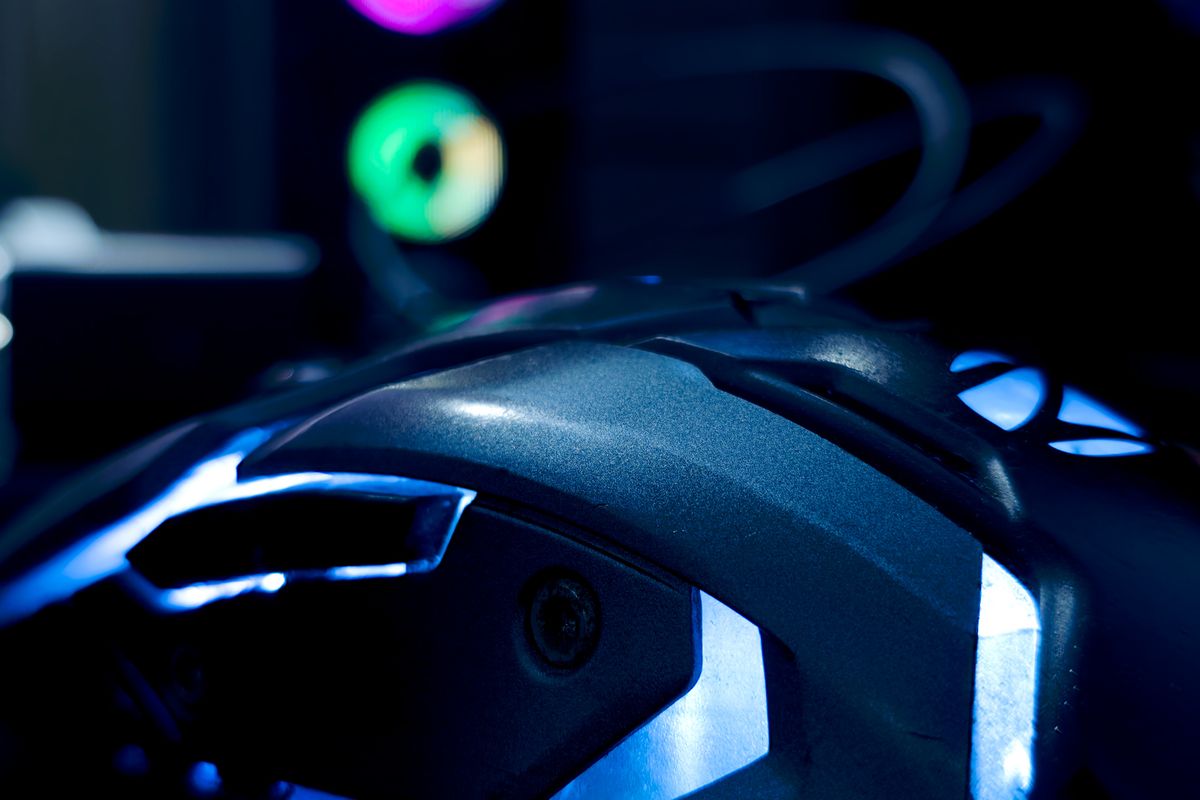
Wireless won the marketing war, but the Endgame Gear OP1 8K makes a wired argument that is hard to dismiss: delete the battery and you get a 50-gram shell, 8000 Hz polling by default, and no charging ritual before a tournament. The spec sheet backs every line of that pitch.
Inside a wired shell
- 50.5 grams in a 118.2 × 60.5 × 37.2 mm right-handed shell shaped for claw and fingertip grips, with extended side walls to prevent accidental side-button presses.
- 8000 Hz polling as the default setting — selectable down to 1000 Hz — driven by a Nuvoton high-speed MCU. No dongle tiers, no firmware update required.
- PixArt PAW3395 sensor rated to 26,000 DPI and 50 G of acceleration, with Kailh GX mechanical switches on the main buttons and Endgame Gear’s flexible Flex Cord 5.0 cable.
TechPowerUp’s review lists it at $74.99, and a v2 revision has since been released with revised internals — worth checking which generation a listing sells. At that price the 8000 Hz default stops being a luxury tier feature, which is most of why this mouse keeps appearing in budget build discussions on community forums.
Does wired still make sense?
For latency purists, yes. A wired link has no RF environment to fight, and 8000 Hz over a cable arrives without the battery compromise every wireless mouse pays — Logitech and Razer both quote their 95-hour figures at reduced polling for a reason. At 144 Hz, polling barely matters either way; our polling rate explainer shows why.
The counterargument is cable drag. A stiff cable on a 50-gram mouse can erase the weight advantage — route it through a bungee or accept the trade. Community reports on the Flex Cord 5.0 are largely positive, but it is the one spec row you should test before trusting.
Next to the wireless pair
Against the Logitech G Pro X Superlight 2, the OP1 8K is lighter, polls harder by default, and costs $40 less; the Superlight answers with wireless freedom and a long record in pro hands. Against the Pulsar X2, the choice is polling versus a rechargeable battery at a similar weight. The picks section below holds the row-by-row numbers, and our Logitech G Pro X Superlight 2 review covers the wireless benchmark in depth.
Small-to-medium hands, claw or fingertip
Claw and fingertip grips in small-to-medium hands are the target; palm grip users should read our grip-style guide before committing, because the low rear hump gives less support than wireless flagships.
Verdict: the OP1 8K is the strongest case wired mice have made in years — 8000 Hz as standard, 50 grams, no battery anxiety. If the cable does not bother you, nothing else here will.
The picks
Some links below are affiliate links — we may earn a commission at no extra cost to you.
Endgame Gear OP1 8K
Best wired 8K $74.9950.5 g wired shell, 8000 Hz polling by default, PAW3395 sensor and Kailh GX switches at $74.99.
Logitech G Pro X Superlight 2
Best wireless $159.9960 g, HERO 2 sensor, up to 8000 Hz polling and 95 hours of battery in the most trusted shape in esports.
Pulsar X2
Best value $99.9556 g, PAW3395 sensor, 1000 Hz wireless polling and 70 hours of battery at $99.95.
Comparison
| Specification | Endgame Gear OP1 8K | Logitech G Pro X Superlight 2 | Pulsar X2 |
|---|---|---|---|
| Weight | 50.5 g | 60 g | 56 g |
| Sensor | PAW3395, 26,000 DPI | HERO 2, 44,000 DPI | PAW3395, 26,000 DPI |
| Max polling rate | 8000 Hz by default | Up to 8000 Hz | 1000 Hz |
| Connection | Wired USB | 2.4 GHz wireless | 2.4 GHz wireless |
| Battery | N/A (wired) | Up to 95 hours | 70 hours |
| MSRP | $74.99 | $159.99 | $99.95 |
Frequently asked questions
- Is the Endgame Gear OP1 8K wired or wireless?
- Wired. It connects over USB with a 1.8 m Flex Cord 5.0 cable, which is how it runs 8000 Hz polling by default without a battery inside.
- What switches does the Endgame Gear OP1 8K use?
- Pre-sorted Kailh GX mechanical switches on the main buttons, rated for 80 million actuations.
- Is 8000 Hz polling worth it on a wired mouse?
- On high-refresh competitive displays it is a real but small gain; at 144 Hz, weight and shape matter far more than the polling row.