Analog Keyboards Explained: Rapid Trigger and Actuation Depth
Analog keyboards replace the binary on/off keypress with a measurable distance — and that single change rewrites how fast you can strafe, stop, and re-strafe.
By Daniel Kwon · October 1, 2026 · Updated October 1, 2026
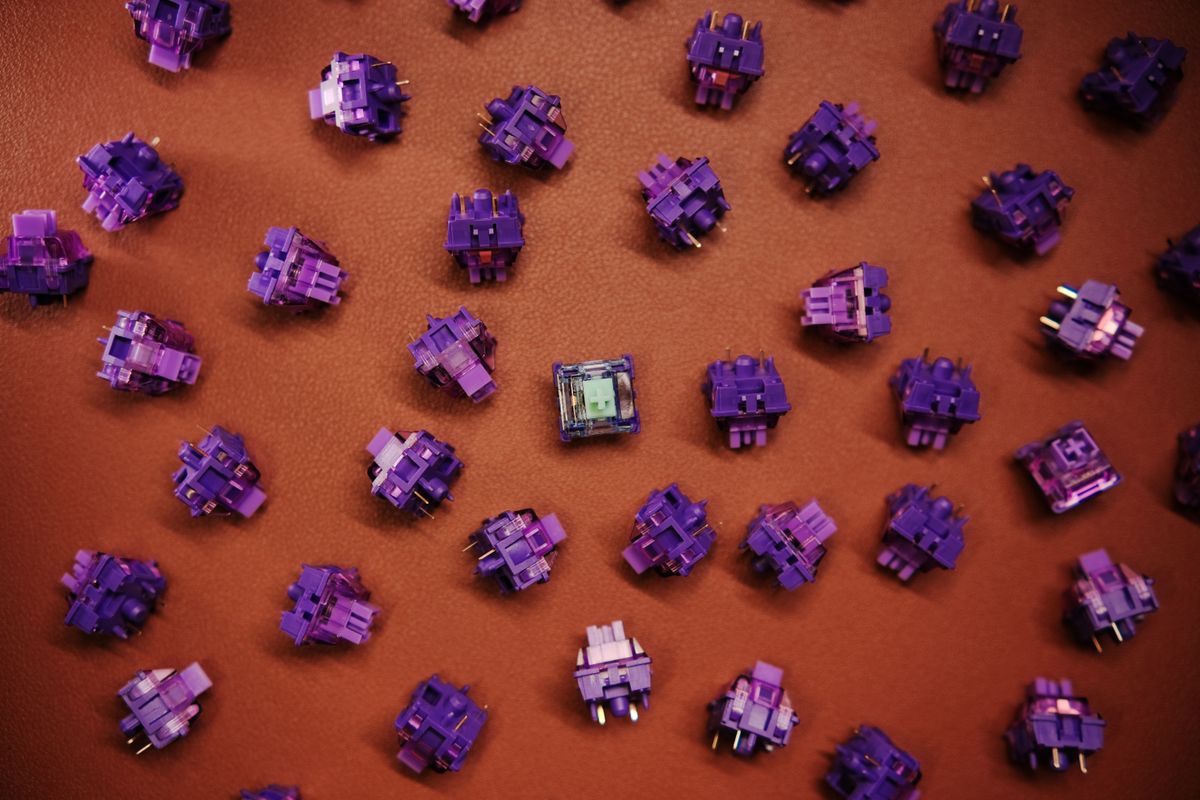
A normal keyboard switch is a binary decision: past a fixed point, the key registers; above it, nothing. An analog keyboard measures how far the key has traveled — continuously, in fractions of a millimeter — and lets software decide what counts as pressed. That one difference is why every serious FPS keyboard released in the last three years is magnetic or optical, and why the whole category exists.
What “analog” actually buys you
Two features do the work. Adjustable actuation lets you set the registration depth per key: 0.1 mm for movement keys that should trigger instantly, 2–4 mm for ability keys you do not want misfiring on a light brush. Rapid Trigger removes the fixed reset point entirely — the key re-arms the instant the stem starts moving back up, so counter-strafing in a shooter becomes a partial lift rather than a full release.
The third piece is less famous but just as significant for movement: SOCD-style features such as Rappy Snappy or Snap Tap resolve conflicting left-right inputs by prioritizing one key, which cleans up A-to-D direction changes. Game publishers have taken different stances on these features, so treat them as game-dependent.
How the sensors differ
Magnetic Hall-effect boards read stem position with a magnet and a sensor, while analog optical boards time how far light travels. Both deliver continuous position data; the practical differences are in calibration consistency and interference resistance. The Hall effect sensor explainer covers the magnetic side in detail.
Setting actuation depth without the typos
The classic mistake is setting every key to 0.1 mm and then wondering why documents fill with stray letters. The setup competitive players converge on is simple: shallow actuation on WASD and space, moderate depth on everything else, and a separate profile for typing. If a key needs intention — an ultimate, a grenade, a push-to-talk — give it deep actuation. Revisit the settings after a week, too: most players raise their movement keys slightly once the initial speed boost stops feeling alien. The Wooting 60HE+ review walks through one board that handles per-key profiles in onboard memory, which makes the game-versus-typing switch a single keypress rather than a software session.
Do you actually need one?
If you play shooters where counter-strafing and peek timing matter, the input-side benefit is real and repeatable. If you mainly play MOBAs, RPGs, or single-player games, a standard mechanical board loses almost nothing — and our linear vs tactile vs clicky guide covers the more relevant decision for that use. Analog is a movement upgrade rather than a general-purpose one, and the budget should match the games you play.
Frequently asked questions
- Do analog keyboards work for typing?
- Yes, but hair-trigger actuation settings cause typos. Most players set movement keys shallow for gaming and raise the actuation depth on typing keys, or switch profiles.
- Is Rapid Trigger the same as a higher polling rate?
- No. Rapid Trigger changes when a key resets during its upward travel. Polling rate is how often the keyboard reports to the PC. They are independent settings.
- Are analog keyboards allowed in competitive play?
- Policies vary by game and tournament. Features like SOCD cleaning have been restricted in some titles, so check the current rules for your game before relying on them.